Thousand Word Essays are based on two randomly-generated words.
Originally published on The Thousand Words Podcast, April 2020.
“There are no beaches in Wisconsin,” say those who have never been.
“You’re from the middle of the country,” say those who have never seen.
“I have to live next to the ocean, it’s so big and the water so calming,” say those who have never known what it is to stand on the bluffs of Milwaukee and look out on the cold waters of Lake Michigan, with its own vastness and grandness.
I still have to double-check which ocean is on which side of the country, is it the Pacific on the West and the Atlantic on the East? In that way, I am very much from the middle of the country. But to think that I don’t need water is to miss entirely the point of a lake big enough to fill a horizon.
I went riding last night down the road that follows the lake, catching glimpses of the waves through the trees. Maybe that’s why people don’t think of Wisconsin as coastal, and to be fair I also don’t think ‘coastal’ is the right word. But the beaches we have here don’t go for miles and miles, they are small and tucked away under the bluffs. Little gems of paradise for six weeks in the summer, when the weather is sticky and the water still freezing. Tiny patches of coarse sand that rip the skin. It’s usually better to stand on the bluffs and think about swimming than it is to wade out into the water.
I still have to double-check with ocean is on which side of the country.
We skipped stones into the lake on middle school Saturday afternoons when the only true freedom we had we got from our twelve-speed bikes and enough pocket money to buy a milkshake from the strip mall deli counter. In the winter we would walk up and down the frozen waves listening to the ice creak, wondering where the beach ended and the water began.
Forty-five minutes north of the city is Kohler-Andre State Park. There are grass-covered dunes there we would roll down and picnic near. Those were in our high school days when we could drive and loved nature but didn’t know enough to know just how big the world might have been for us. We pulled an old picnic table out into the shallow part of the lake and ate peanut butter and jelly sandwiches with our feet in the water. When it started to rain, we sheltered under the visitor center’s roof and watched the sky turn grey, then pink, and the water choppy.
The day after high school graduation, I biked to the grocery store, bought a doughnut and chocolate milk, and went to where we used to skip rocks. I watched the sunrise over Lake Michigan and wondered how, after years of skipping stones, there could still be perfect skipping pebbles left on the beaches.
Leaving was the easy part, when it came time to do that. Point my packed car west for the mountains and the deserts. Across the Iowa wheat fields and the Kansas plains. I even made it to the West Coast a couple times. The Redwood forest in Oregon, Seattle twice. I spent time in the Douglas firs, the Aspens, and the Rockies. Santa Fe, Moab, San Juan National Forest. I made it to Idaho, even, and western Montana. I looked for treasure near Buena Vista, slept in rest areas in Utah, and saw the stars of desert nights and the early morning dews of alpine lakes. Leaving was the easy part, when it came time to do that.
Last night, as I stopped my bike at my favorite bluff on my favorite ride into the city, I saw for the first time in years that great lake. There were other people there, walking their dogs trying not to bother anybody else. And there I was, a balaclava over my nose and mouth, gloved hands resting on the bars, one foot still clipped into the pedal, watching a boat interrupt the misty horizon.
Coming back was the easy part, when it came time to do that. Because returning often feels like retreat or failure. But when the time is right, when limping along Interstate 80 at 65mph is the only thing left to do, returning feels like liberation.
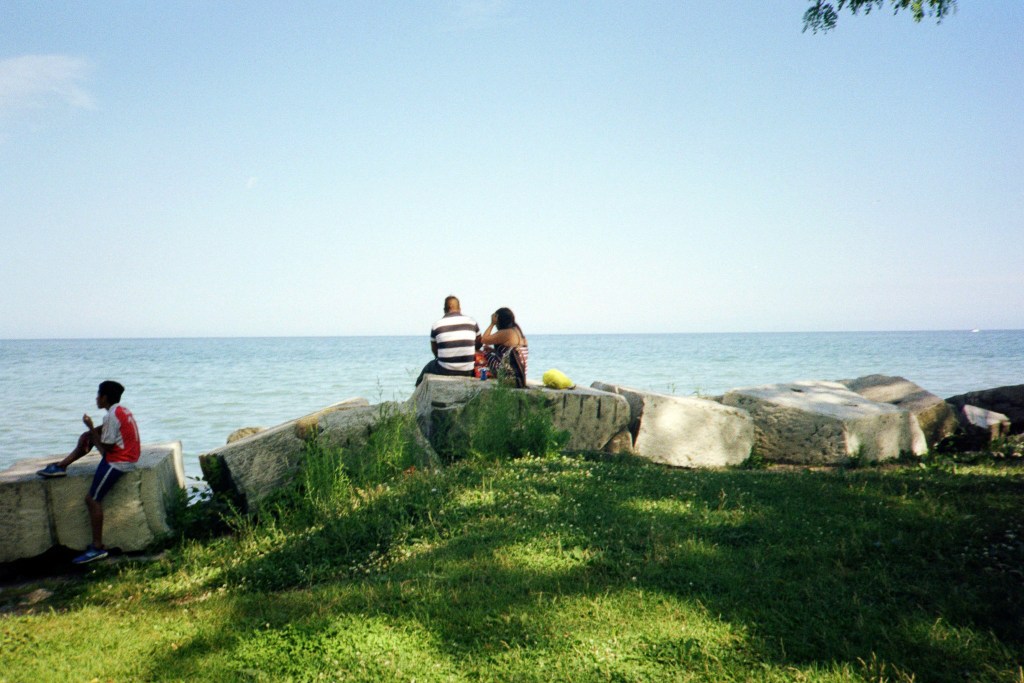
I have a better understanding of how big the world is now. I’ve been out in it, out there where scary things happen to good people, where rocks fall and people with them. I’ve been out where trees grow bigger than they do here. Out where roads don’t have names and aren’t paved, where a blown tire on a highway means two days delay. Out there in a world that doesn’t care about bluffs above Lake Michigan. Out where the world spins a litter faster and with more force. Out in the unfamiliar. And it was good. Good to disappear into a world that will never know me. A world that doesn’t care too much where I am or what I’m doing. Good to feel insignificant out there in the desert with pit toilets and sandy sleeping bags. Good to feel like I’ve seen things.
Returning was the easy part, when it came time to do that. But there’s a thread there, a leaving and return, Lake Michigan to the desert. Cyclical. Like the seasons. Like deciduous trees dropping their leaves. Like tides. Transience is the easy part, then. Coming and going, venturing out into the world and then back home. Away from the water, then back. Out and in. Life’s breath. Settling down will be the hard part. Knowing how big the world is and how much I have to see, I don’t think I’ll be content with just the bluffs of Milwaukee, the deserts of the West, or maybe not even the Redwoods. Coming and going, in and out, returning and leaving. But the world spins and middle schoolers skip stones into the calm waters of June Lake Michigan. And the world spins and young folks in vans drive through the night to get to one coast or the other, one campground or another. The world spins, and there are no true beaches in Wisconsin.
 Craig Carey
Leave a comment